



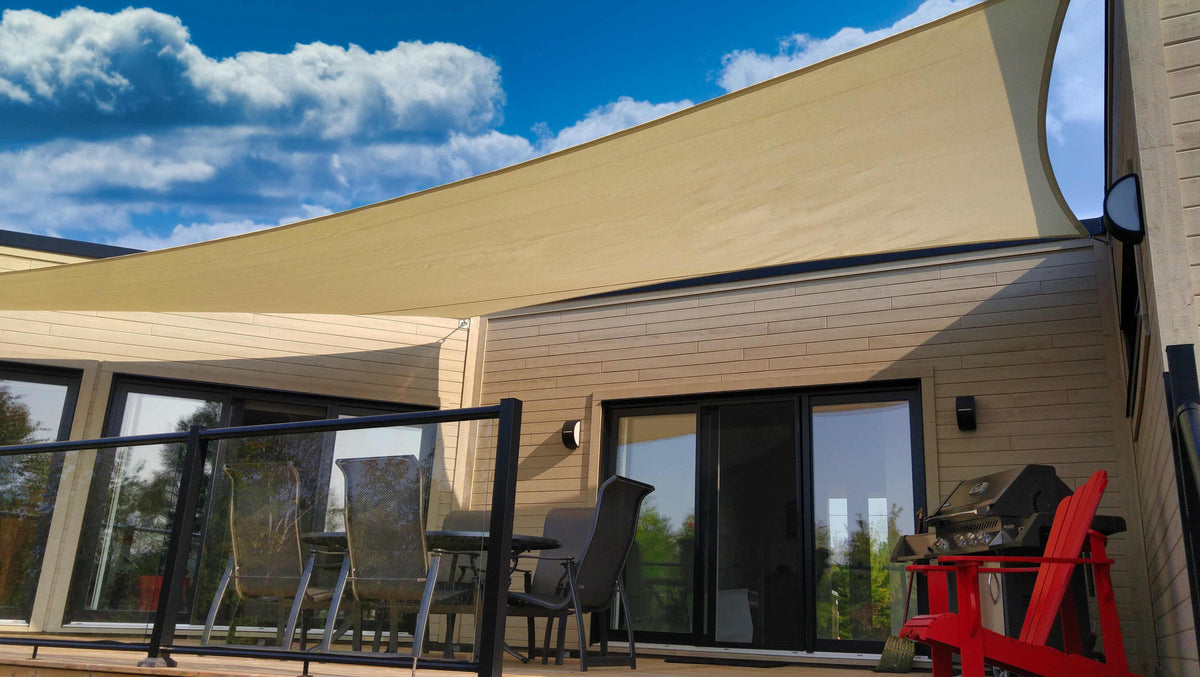
Yes, you can install a Shade Sail without posts. In fact, many patios, decks, courtyards, and outdoor living areas already have suitable structures that can be used as mounting points.
The key is having enough strong, correctly positioned anchor points around the area you want to shade. Suitable fixing points may include structural parts of a house, reinforced walls, substantial beams, or other structures capable of handling the tension and wind loads created by a Shade Sail. Gutters, decorative fascia boards, and ordinary fence posts, on the other hand, are generally not suitable mounting points on their own.
If you already have strong, well-positioned structures available, installing a Shade Sail without posts can produce a very clean result and may save you from adding poles through a deck, garden, paving, or entertaining area.
So, what can you use instead of posts, and how do you know whether your existing structures are suitable?
What You Need to Install a Shade Sail Without Posts
A Shade Sail does not actually require posts. It requires strong, correctly positioned anchor points. Posts are simply one way of creating those anchor points when there is nothing suitable in the right location.
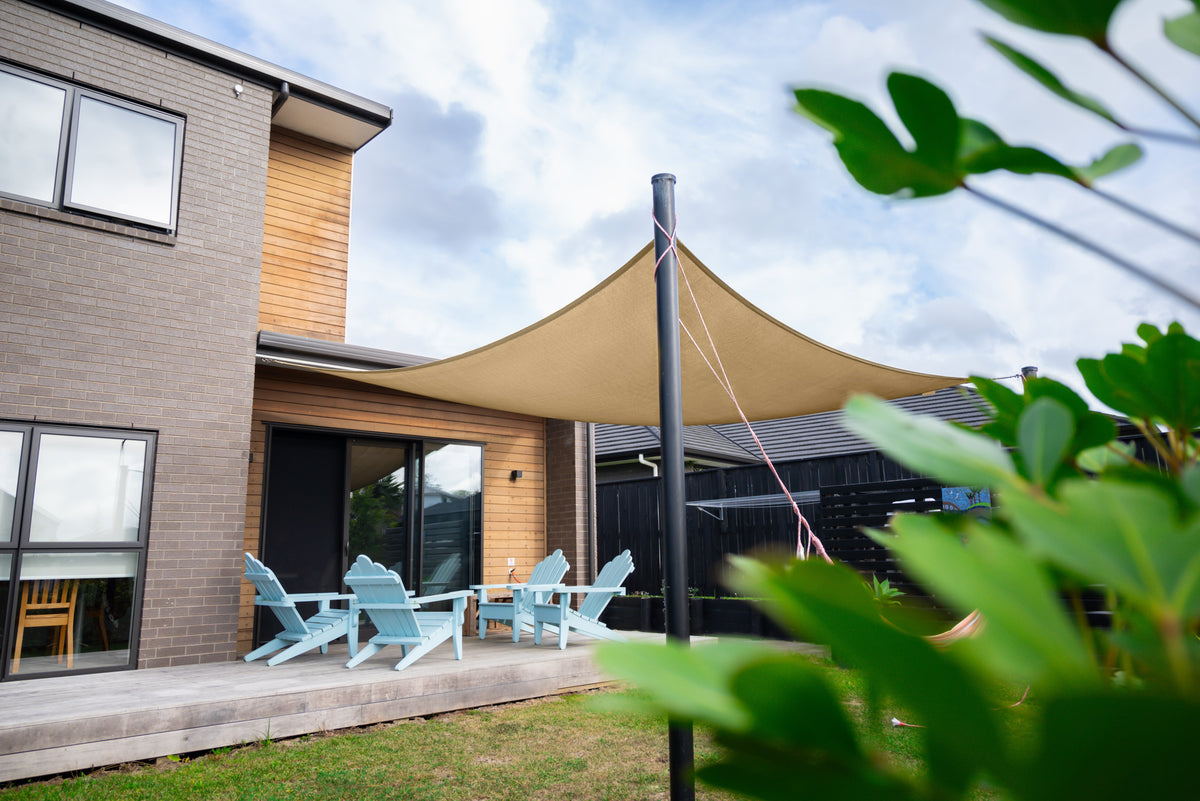
For example, a rectangular patio beside a house might already have two suitable structural fixing points along the building. If there is also a substantial pergola or engineered structure on the opposite side, it may be possible to create all four mounting points without adding a single new post.
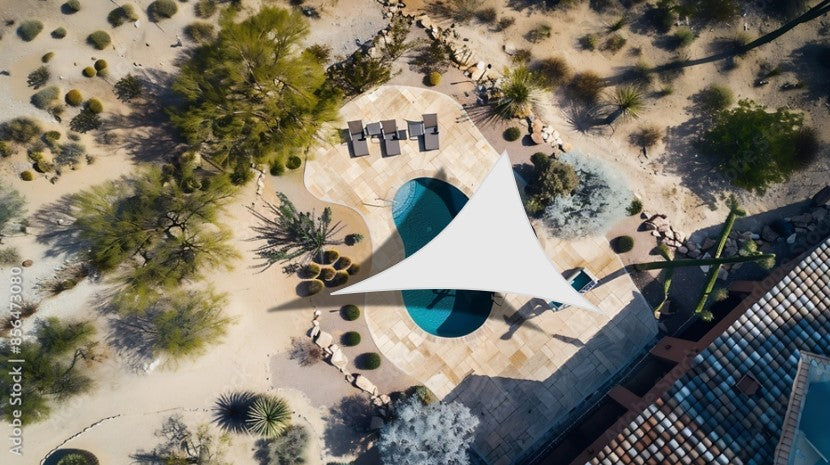
Likewise, a triangular Shade Sail may work particularly well where two structural points are available on the house and a third suitable structural anchor already exists elsewhere.
The advantage is obvious: fewer obstructions around the area and no new post footings required.
However, installing a Shade Sail without posts does not remove the structural loads. It simply means those loads are being transferred into your existing structures instead. As Shade Space's mounting guidance emphasizes, a Shade Sail is only as strong as its mounting points and the structure supporting them.

What Can You Use Instead of Shade Sail Posts?
The first step is to look at the structures already surrounding your area, identify potential structural fixing points, and then determine whether they are suitable for the loads involved.
The most common alternatives to dedicated Shade Sail posts are house framing, concrete or masonry walls, structural beams or steelwork, and substantial existing pergola or patio frames.
Each can work well in the right situation, but there are advantages and limitations to consider.
House Framing or Roof Structure
A house can provide very useful mounting points, especially along patios, decks, or courtyards. The exact fixing required will depend heavily on how the house is constructed, so you will need to identify the position of rafters, framing, or other structural members before selecting suitable hardware.
The advantage is that a house may already provide several mounting points exactly where you need them, potentially eliminating multiple posts.
The limitation is that the visible part of the house is not necessarily the structural part. The fixing needs to connect back into suitable structural framing rather than relying only on cladding, fascia, trim, or other finishing materials.
Concrete or masonry walls
A solid wall can be an excellent mounting location where the wall construction and anchors are suitable. This can create a clean installation with very little visible mounting hardware and may provide a strong fixing point without taking up any ground space.
The main consideration is knowing what you are actually fixing into. Solid concrete, brick, hollow block, and brick veneer are different forms of construction and may require very different fixing methods and hardware.
Not every masonry surface should be treated the same way.
Structural beams or steelwork
Existing structural beams and steel frames can provide very useful fixing points, particularly when they are already positioned above or alongside the area you want to shade. They can also provide mounting points at useful heights without introducing additional posts into the outdoor area.
The main consideration is whether the beam, its connections, and the structure supporting it can handle the additional sideways and upward forces created by a tensioned Shade Sail.
A beam may look substantial but should still be checked before attaching a Shade Sail. If you are unsure about its suitability, a structural engineer should confirm the final fixing arrangement.
Existing pergola or patio frames
When the structure is positioned in or around the area you are looking to cover, an existing pergola or patio frame can be a very practical way to support one or more corners of your Shade Sail. It may already provide both the position and height you need, which can make it possible to create a good Shade Sail layout without installing extra posts.
The key is whether the frame itself is strong enough and securely anchored. A lightweight decorative pergola may not be suitable, while a substantial steel or timber structure with properly supported beams may provide useful mounting points.
It is also worth considering what the pergola or patio was originally designed to support. Many lightweight structures are designed primarily to carry their own roof, battens, or shade covering.
Adding a tensioned Shade Sail introduces forces that may not have been considered when the structure was built.
The Pros and Cons of Installing a Shade Sail Without Posts
The biggest advantage of using existing structures is that you can keep the area feeling more open. There are fewer posts interrupting views, walkways, entertaining areas, gardens, paving, or decking, and you may also avoid the work involved in installing a new post and footings.
There is a trade-off, however.
When installing dedicated posts, you have much greater freedom to position each mounting point where it creates the best Shade Sail layout. When you use existing structures, those structures largely determine where your mounting points can go.
Instead of positioning the anchors to suit a predetermined sail, the Shade Sail often needs to be designed around the strong, suitably positioned anchor points that are available.
This is where a custom-made Shade Sail can be particularly useful, as it is manufactured to suit the exact measurements and final layout of those mounting points.
How Do You Know if Your Existing Structures Are Suitable?
Before deciding that you can install your Shade Sail without posts, inspect each proposed fixing location and think about the complete load path from the corner of the Shade Sail, through the mounting hardware, and into the structure supporting it.
If you are attaching to a house, find out what is behind the exterior surface.
If you are attaching to a beam, confirm that both the beam and its connections can handle the forces in the direction the Shade Sail will pull.
If you are mounting into masonry, determine what type of masonry you actually have. Solid concrete, solid masonry, hollow block, and brick veneer are not interchangeable when choosing anchors.
This is one area where guessing is not worthwhile.
Large Shade Sails, long spans, high mounting points, exposed locations, and areas with stronger winds all increase the loads placed on the supporting structures. Where there is any uncertainty, the final structural specification should be confirmed by a qualified builder or engineer.
A Typical Shade Sail Without Posts
Imagine a 12 ft × 16 ft (3.6m x 3.8m) patio running alongside a house.
There are two suitable structural mounting locations available along the house wall and a substantial existing steel-framed patio structure at the opposite side.
Instead of installing four new posts, the layout could potentially use:
House side: Two properly designed structural wall fixings.
Outer side: Two fixing points incorporated into the existing structural frame, provided the frame and its connections are suitable for the additional loads.

The mounting points can then be installed in their final positions, ideally incorporating useful height variation across the Shade Sail. Exact measurements and diagonals are taken between those finished mounting points.
A custom four-corner Shade Sail can then be manufactured to suit those dimensions while allowing the required space for the specified turnbuckles, shackles, and other tensioning hardware.
The result is a clean Shade Sail installation without additional posts interrupting the patio.
This is generally a much better approach than purchasing a standard-size Shade Sail first and then trying to find convenient surfaces around the property that happen to match it.
What If You Don't Have Enough Suitable Mounting Points?
Not every outdoor area can accommodate a completely post-free Shade Sail.
If your existing structures only provide two or three strong, suitably positioned mounting points, adding one properly designed steel post may be the better solution.
A steel Shade Sail post installed in the right position with an appropriate footing gives you control over both the location and height of that final mounting point. This can produce a much better overall sail shape than compromising the layout by attaching to an unsuitable existing structure.
Sometimes, the best solution to installing a Shade Sail without four new posts is simply to use one strategically positioned post instead.
You can read Shade Space's guide to Shade Sail poles and footings if your layout requires one or more purpose-built mounting points.
Common Mistakes When Installing a Shade Sail Without Posts
· Attaching directly to fascia - The visible fascia may not be capable of carrying the load. Where a fascia-area fixing is used, the load needs to be transferred back into suitable structural members. For example, the fascia board you can see may only be a finishing board. Attaching a tensioned Shade Sail directly to an unsupported fascia can potentially pull the fascia away from the building.
· Using ordinary fence posts - Standard residential fence posts should not be used or treated as permanent Shade Sail posts. They are not designed for the loads created by a properly tensioned Shade Sail.
· Installing all mounting points at the same height - With four-corner and larger Shade Sails, varying the mounting heights can create useful twist and three-dimensional shape through the fabric, helping the sail tension correctly.
· Measuring before the mounting points are finished – If an anchor point is moved or installed after a custom Shade Sail has been manufactured, the geometry of the installation changes. This can mean the sail no longer fits correctly or, at best, becomes much harder to tension properly.
Can You Install a Shade Sail Without Posts? The Bottom Line
Yes, you can install a Shade Sail without posts when there are enough strong, suitably positioned structures around the area to provide the required mounting points.
The important thing is to think in terms of structural anchor points rather than convenient attachment points.
If one corner does not have a suitable structural anchor, adding a properly designed steel post is a better solution than compromising the installation with a weak mounting point.
ShadeSpace custom-made Shade Sails are particularly useful when installing a Shade Sail without posts, because the sail can be manufactured around your completed mounting-point locations rather than forcing your existing structures to suit a predetermined sail size.
Ready to plan your Shade Sail? Start with the ShadeSpace mounting-point guides to determine and install your structural fixing points, then use the Custom Shade Sail Configurator to create a Shade Sail around your exact measurements.





Share:
How to Set Shade Sail Posts in Concrete
How to Find a Stud in an Exterior Wall for a Shade Sail