




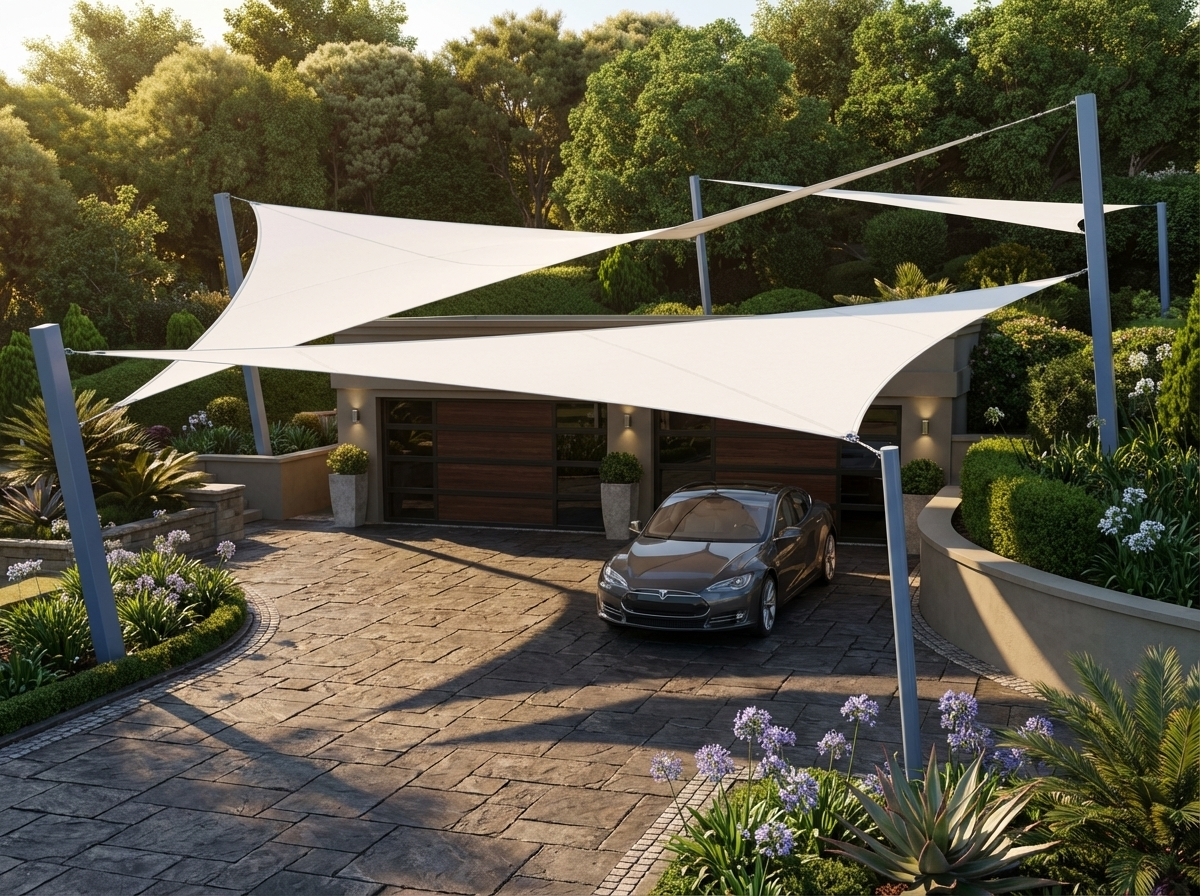
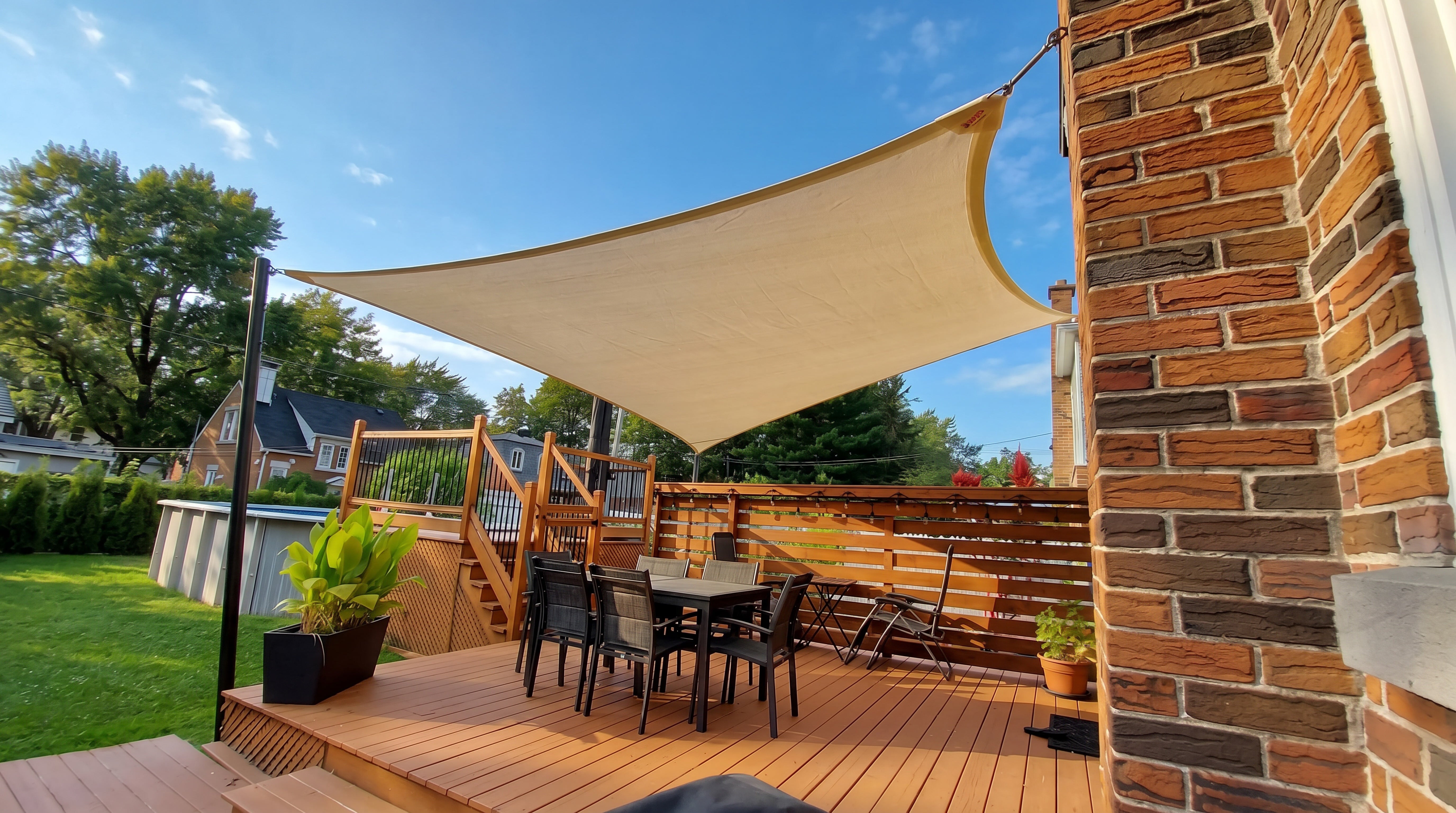
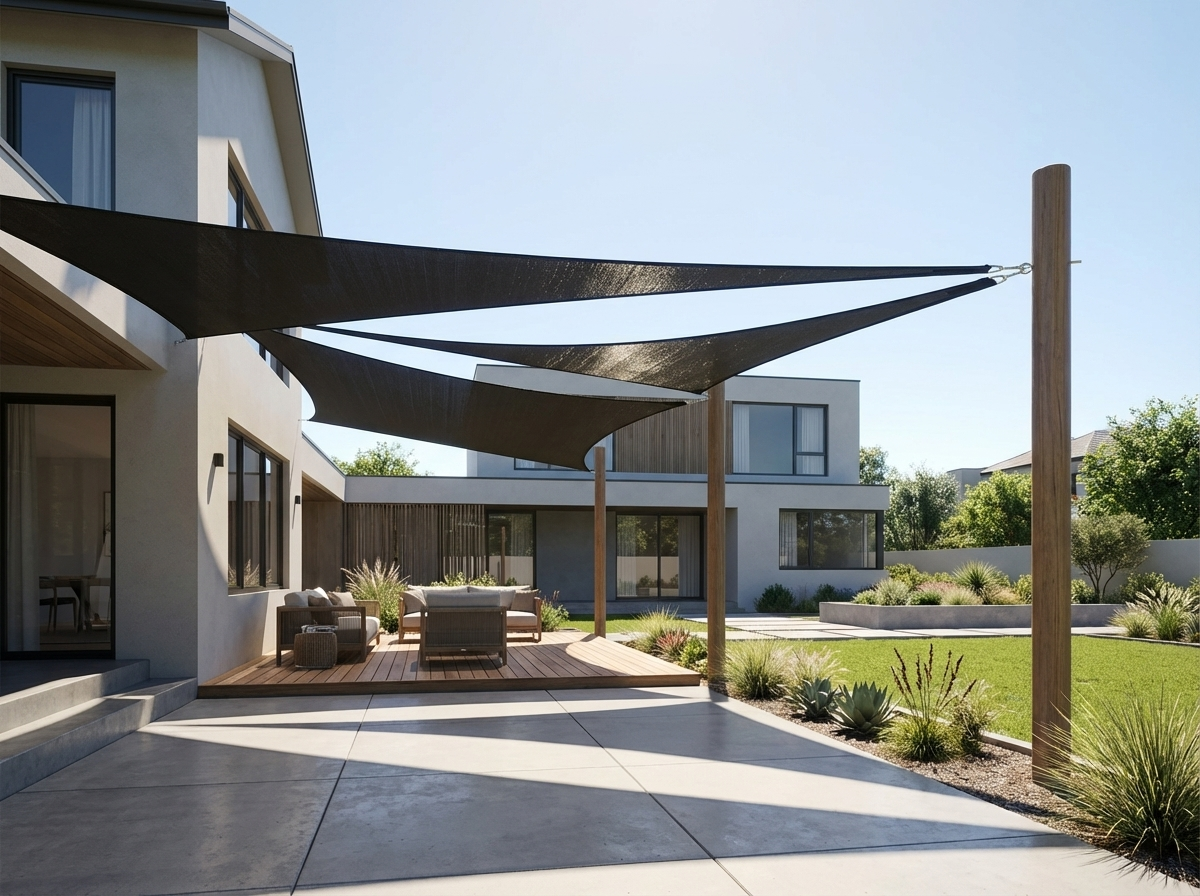
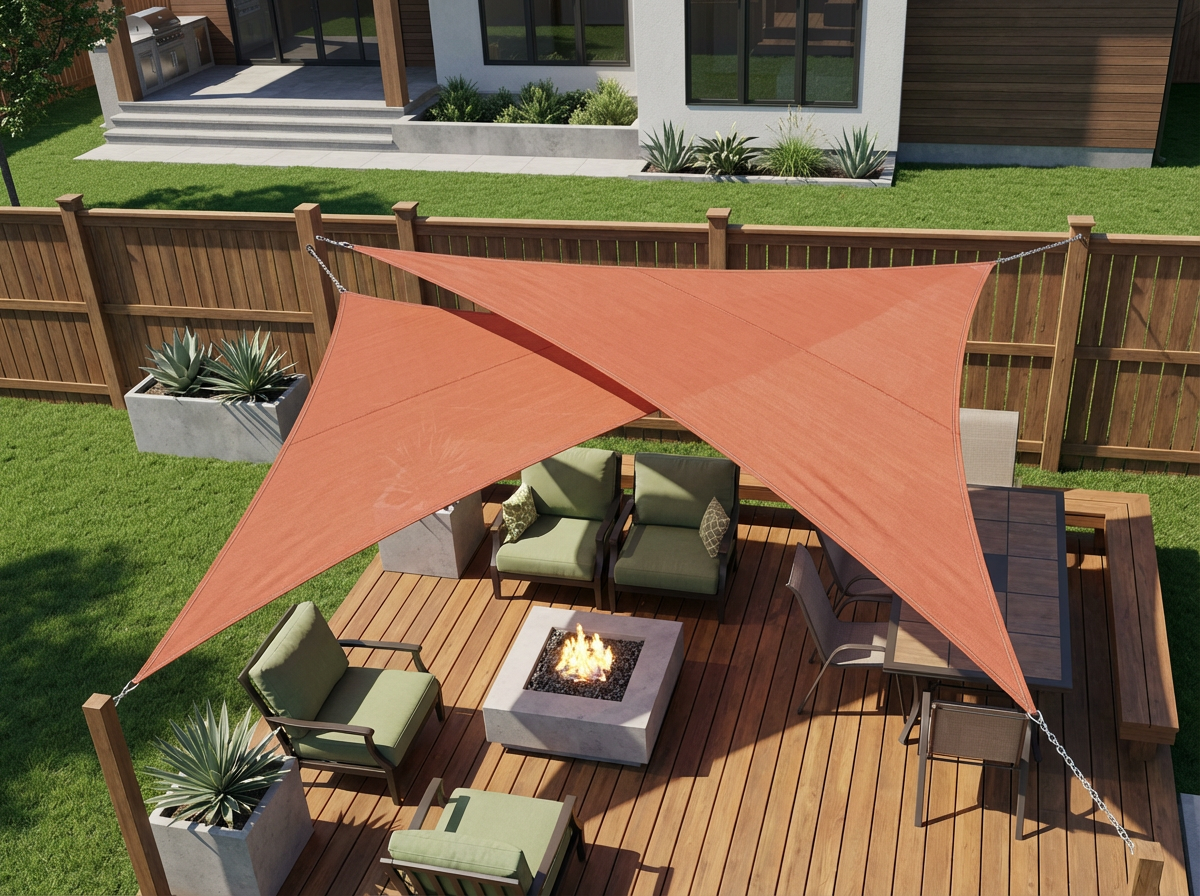
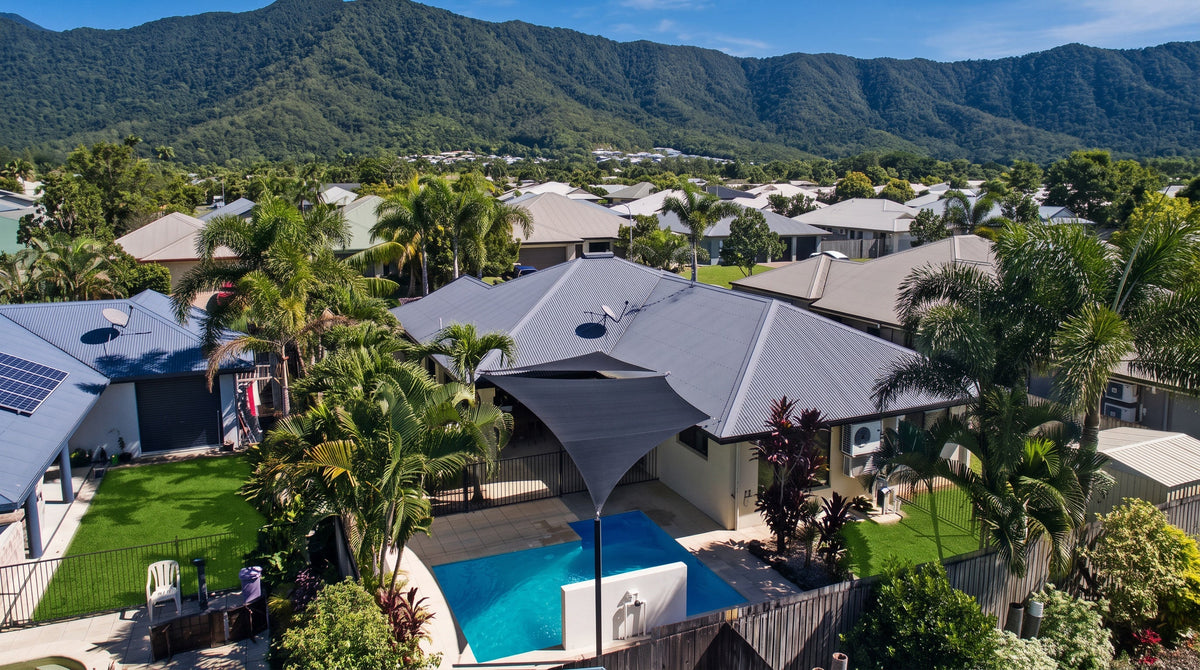
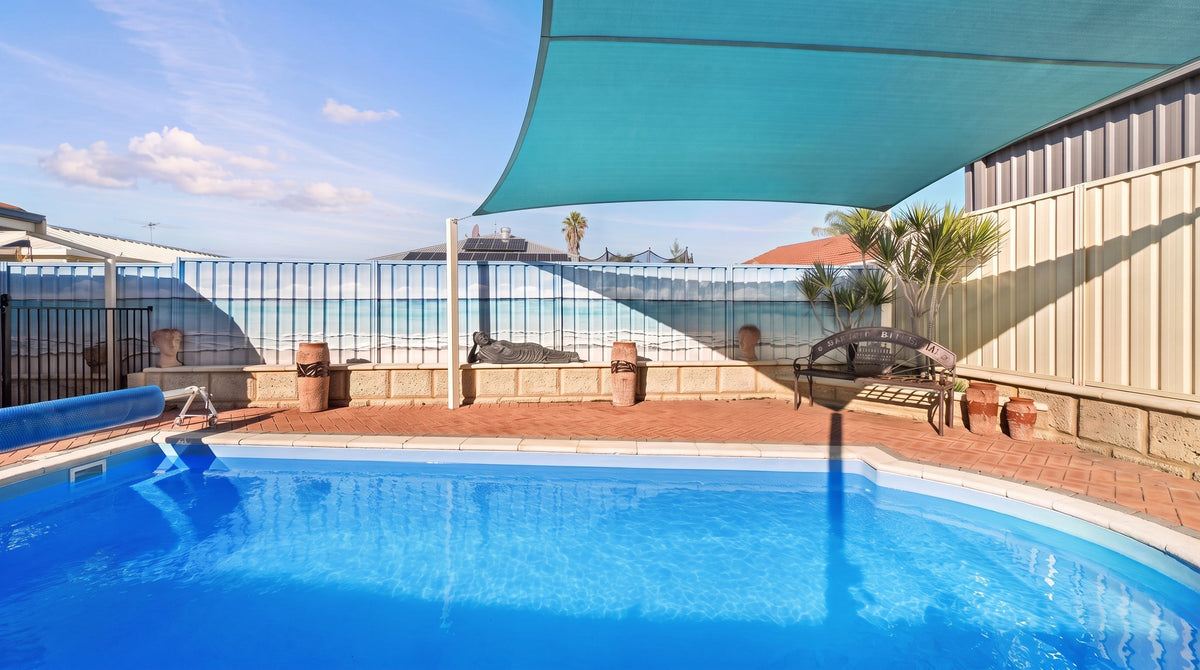
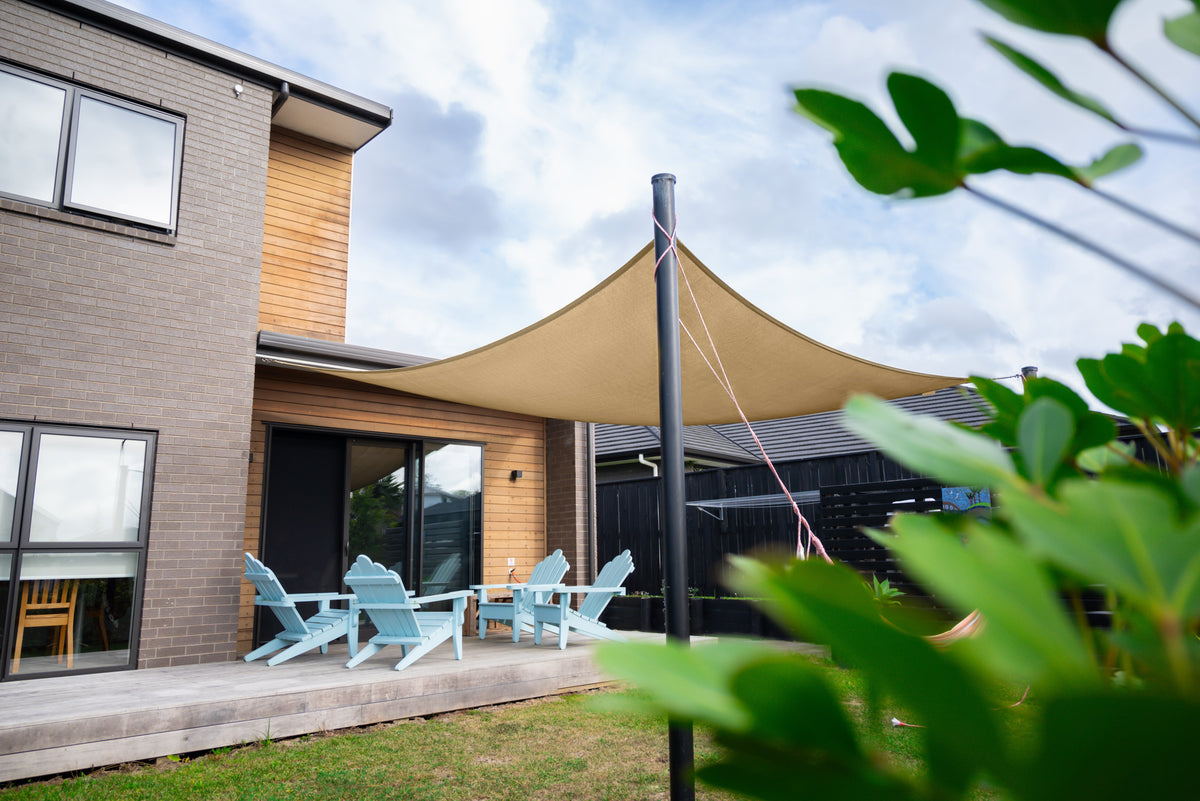
A hypar Shade Sail is a four-sided Shade Sail with two diagonally opposite corners set high and the other two diagonally opposite corners set low. When the Shade Sail is tensioned between these four points, the difference in corner heights creates a three-dimensional twist, or saddle shape.
The term hypar, sometimes written as HyPar, is short for hyperbolic parabola or hyperbolic paraboloid. That is the technical name for the curved, three-dimensional shape, but you don't need to understand the geometry to use the idea.
In practical terms, think high, low, high, low as you move around the four corners of the Shade Sail.
This twisted shape is not just about appearance. Creating enough height difference between the corners helps the Shade Sail tension properly, while also affecting how much shade it provides and how it looks once installed.

How Does a Hypar Shade Sail Get Its Shape?
The distinctive shape comes from the position of the four fixing points.
Two diagonally opposite corners are installed as the high points, while the other two diagonally opposite corners become the low points.
When a custom-made Shade Sail is fitted and tensioned between them, the fabric follows these different fixing heights and forms the characteristic three-dimensional twist.
Unlike a flat sail, where all four corners are at similar heights, a hypar has a clearly defined high and low orientation. This three-dimensional geometry helps the Shade Sail develop and maintain tension rather than simply hanging between four points.
How Much Height Difference Does a Hypar Shade Sail Need?
As a general design guide, Shade Space recommends making the difference between your high and low fixing points around 15% of the Shade Sail's longest side.
The calculation is simple:
Longest side × 15% = recommended high-to-low height difference
For example, if the longest side of your Shade Sail is 20 ft (6m):
20 ft (6m) × 15% = 3ft (0.9m)
So, you would aim for approximately 3 FT (0.9m) of height difference between the high and low fixing points.
It is important to note that the 15% figure is the difference between the high and low points, not your overall installation height of the fixing points.
For example, a 20 ft Shade Sail could have low points at 8 ft and high points at approximately 11 ft, giving the required 3 ft difference. The actual fixing heights still need to suit your space, clearance requirements and supporting structures.
The 15% guideline provides a good balance between three important criteria of a hypar Shade Sail: performance, effectiveness and visual appeal.
What Happens If a Shade Sail Is Flat or Has Less Than 15% Height Difference?
A Shade Sail with very little height difference between its corners may look fine on paper, but once installed, the lack of three-dimensional shape can impact its performance, effectiveness, and visual appeal.
Performance – A flat Shade Sail will be difficult to tension adequately. Without enough three-dimensional shape, the fabric may belly in the middle and move or flap more in the wind. Over time, this movement can shorten the life of the fabric and causes wear and tear on the hardware.
Effectiveness - A flat Shade Sail may cast a slightly larger shadow because more of the sail is positioned horizontally. This can provide a small increase in the shade footprint.
Visual Appeal - A flat Shade Sail, particularly one that develops a sagging belly in the middle, seldom looks as aesthetically appealing as a properly twisted hypar Shade Sail.
What Happens With a Dramatic Hypar of 20% or Greater Height Difference?
A Shade Sail can be designed with considerably more than 15% height difference, however once you move to 20% or greater, the twist becomes much more pronounced.
For example, on a 20 ft (6m) Shade Sail:
15% = 3 ft (0.9m) height difference
20% = 4 ft (1.2m) height difference
25% = 5 ft (1.5m) height difference
Increasing the height difference between high and low fixing points to 20% or more of the Shade Sail's longest side creates a much more dramatic three-dimensional twist that will influence your sail's performance, effectiveness, and visual appeal.
Performance – A dramatic hypar Shade Sail should easily tension up nice and tight. However, this is only a benefit if it is professionally patterned by an experienced manufacturer.
Effectiveness – With the extra-tall high points the sun will tend to sneak in under the high points reducing the shade footprint slightly.
Visual Appeal - A height difference of 20% or greater can create a dramatic visual effect. However, to allow the extreme three-dimensional shape to be achieved without wrinkles, additional joins may be required as shade fabric only has limited stretch.

Plan Your Hypar Heights for Effective Shade
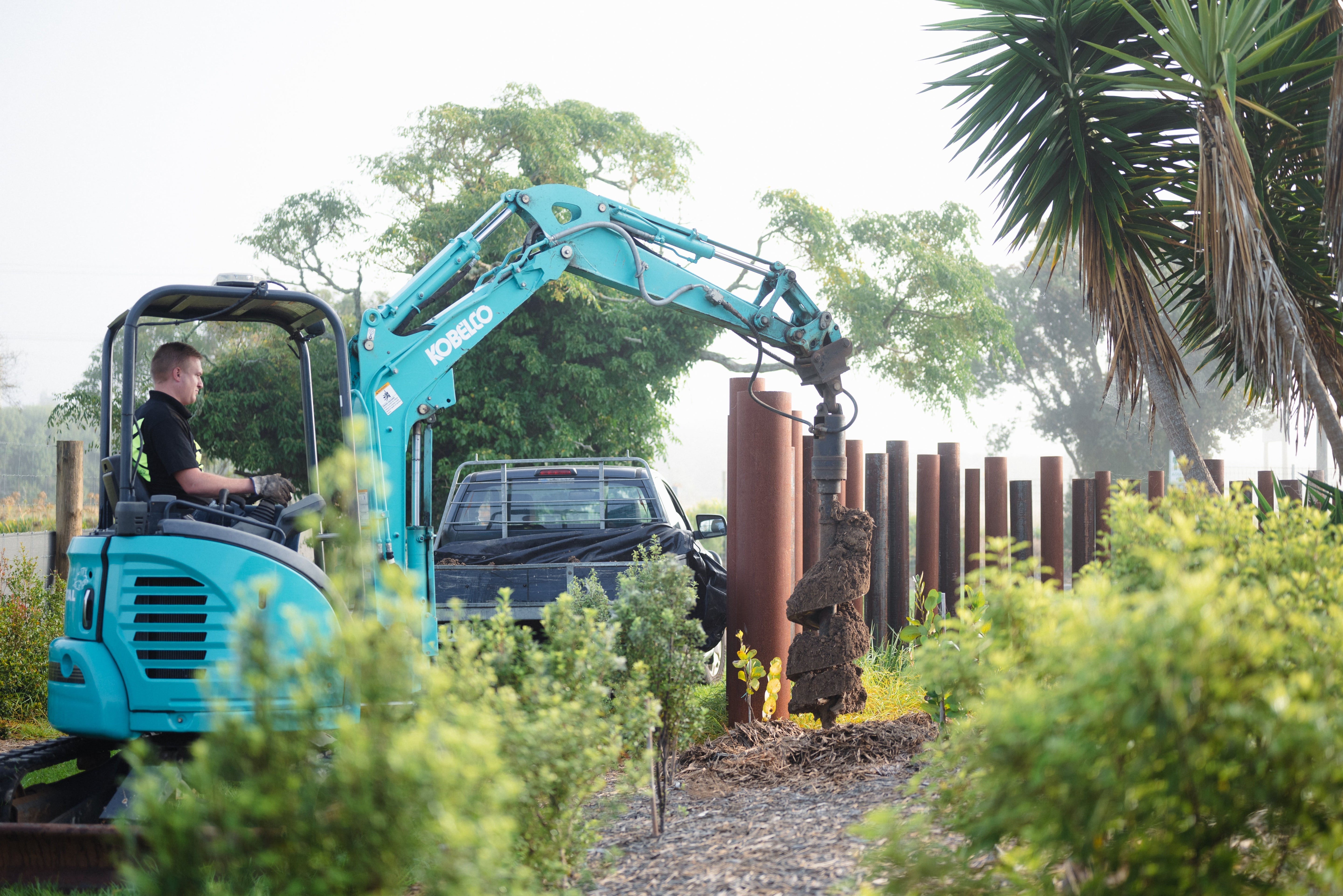
The high and low points should be considered before installing your posts, as their position and height will affect both the shape of the hypar and where the Shade Sail actually casts its shade.
Start by working out where your fixing points need to be. Then decide which two diagonal corners will be high and which two will be low, using the 15% guideline as a starting point for the height difference.
When choosing these heights, consider the clearance underneath the low points, the overall height of the high points, nearby buildings and outdoor areas, and—importantly—the direction of the sun when you most want the area shaded.
The higher you raise a corner, the easier it becomes for low-angle sunlight to come underneath that part of the Shade Sail. This is particularly noticeable in the morning and afternoon when the sun is lower in the sky.
A dramatic hypar may look impressive, but excessively high or poorly positioned high points can reduce the effective shade footprint. When deciding which corners should be high and low, consider where the sun will be coming from during the times you most want to use the shaded area.
Planning the fixing-point positions, high and low corners, and sun direction together will help you create a hypar that not only looks good and tensions properly, but also puts the shade where you actually need it.
Flat, 15% or 20% - What are the Differences?
The easiest way to think about the options is as a balance.
Less than 15% gives you a flatter Shade Sail. You may gain a little shade footprint, but the sail can become harder to tension, more prone to belly and movement, and less visually defined.
Around 15% creates a clear hypar shape while balancing tension, usable shade and appearance. This is why it is Shade Space's recommended starting point.
20% or greater creates a much more dramatic hypar. It can produce excellent tension and a striking appearance when properly patterned, but the higher fixing points can allow more sunlight underneath and the sail itself can become more complicated to manufacture.
There isn't a need to create the biggest possible twist. The aim is to create enough three-dimensional shape for the Shade Sail to perform properly while still providing useful shade where you need it.
So, What Is a Hypar Shade Sail?
A hypar Shade Sail is a four-sided Shade Sail with two diagonally opposite high points and two diagonally opposite low points, creating a three-dimensional twist or saddle shape.
The amount of height difference between those points affects how well the Shade Sail tensions, the shade it provides and its overall appearance.
As a quick overview:
- Less than 15% — Flatter: May provide a slightly larger shade footprint, but can be harder to tension, more prone to belly and movement, and less visually defined.
- Around 15% — Balanced: Creates a clear hypar shape with a good balance of tension, effective shade and visual appeal. This is Shade Space’s recommended starting point.
- 20% or greater — Dramatic: Creates a stronger architectural twist and can tension very well when properly patterned, but higher fixing points can allow more sunlight underneath and the sail can be more complex to manufacture.
Ultimately, a hypar isn't about creating the biggest possible twist. The aim is to create enough three-dimensional shape for the Shade Sail to tension and perform properly while still providing useful shade where you need it.
For most hypar Shade Sails, start with a height difference of around 15% of the longest side, then consider your fixing-point layout, available heights and the direction of the sun before deciding on the final position of your high and low corners.
From there, use the Shade Space DIY measuring and installation guides to plan your fixing points and take the measurements for your custom-made Shade Sail.






Share:
Where to Buy Shade Sail Roof Brackets