



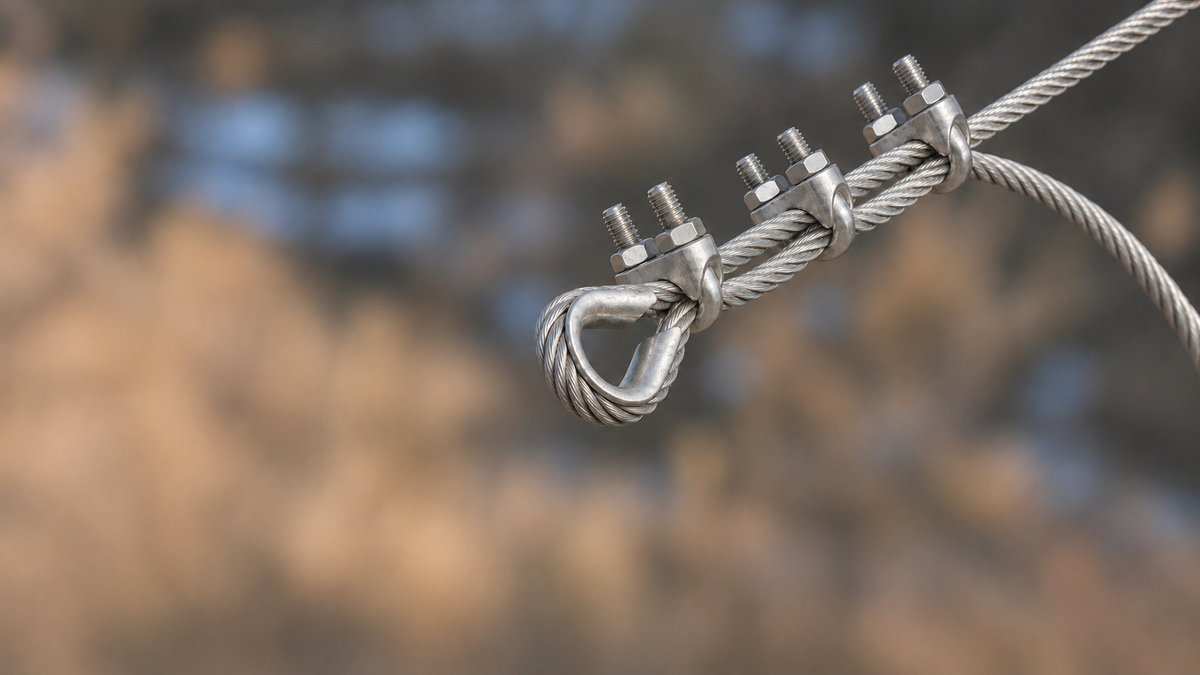
When fitting wire rope grips (also known as wire rope clips or cable clamps), getting them the right way around is important.
A wire rope grip might look like a simple fitting, but installing it backward can damage the wire and weaken the connection.
Fortunately, there's an easy way to remember the correct position.
The Correct Way to Fit a Wire Rope Grip
A standard wire rope grip consists of two main parts:
- The U-bolt: The U-shaped threaded section.
- The saddle: The flat, grooved section that sits underneath the two nuts.
The saddle must always sit against the live (load-bearing) section of the wire, while the U-bolt sits over the dead end (the short tail of the wire).
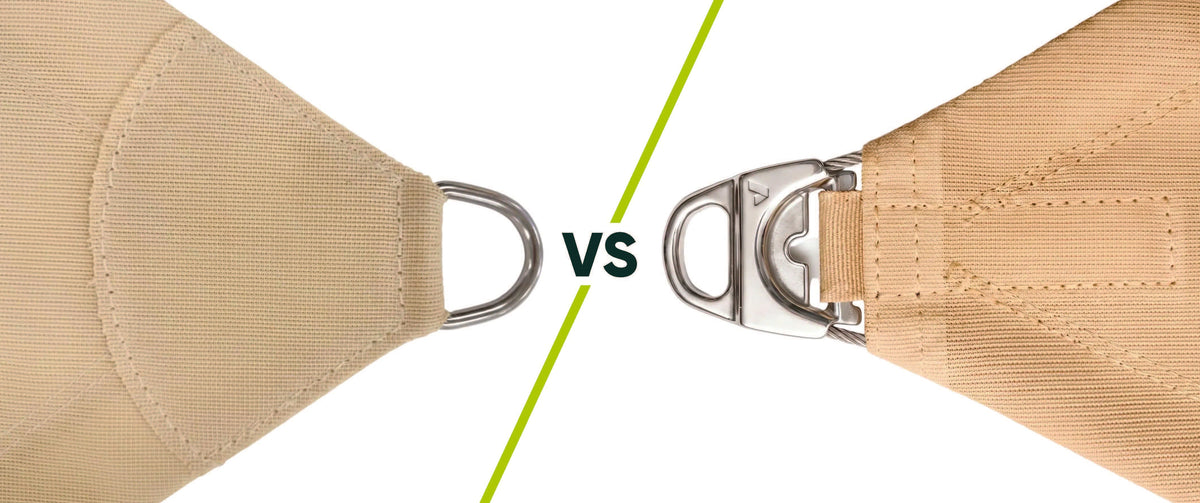
On a Shade Space wire-edge Shade Sail, the live end is the main length of wire that runs around the entire perimeter of the sail. The dead end is the short, loose tail of wire that passes through the wire rope grips and is then tucked back into the Shade Sail hem for a neat, tidy finish.
There's an old rigging saying that makes this easy to remember:
"Never saddle a dead horse."
In other words, never put the saddle on the dead end of the wire rope.
Both of the wire grips should face the same direction. Never alternate them.

How far apart should wire rope grips be?
Wire rope grips should be spaced approximately 6 times the diameter of the wire rope apart, measured from the center of one grip to the center of the next. For example, if you're using 3/16” (4mm) wire rope, the grips should be spaced approximately 15/16” (24mm) apart. For 3/16 (5mm) wire rope, that increases to 1 3/16” (30mm). Keeping the grips correctly spaced helps distribute the clamping pressure evenly and creates a more secure connection.
Why Does the Direction Matter?
The U-bolt applies concentrated pressure to the wire rope as the nuts are tightened.
If the U-bolt is positioned against the live, load-bearing wire, it can crush or deform the strands, reducing the strength of the connection.
The saddle is designed to support the wire more evenly, which is why it belongs on the live section.
Getting this backward can significantly weaken the connection, even if the nuts feel securely tightened.

Remember: Saddle on the live end. U-bolt on the dead end.
Before tightening any wire rope grips, check that they're facing the correct way. It's a simple detail that can make a big difference to the security and performance of the connection.








Share:
How to Hang Outdoor String Lights on a Shade Sail