



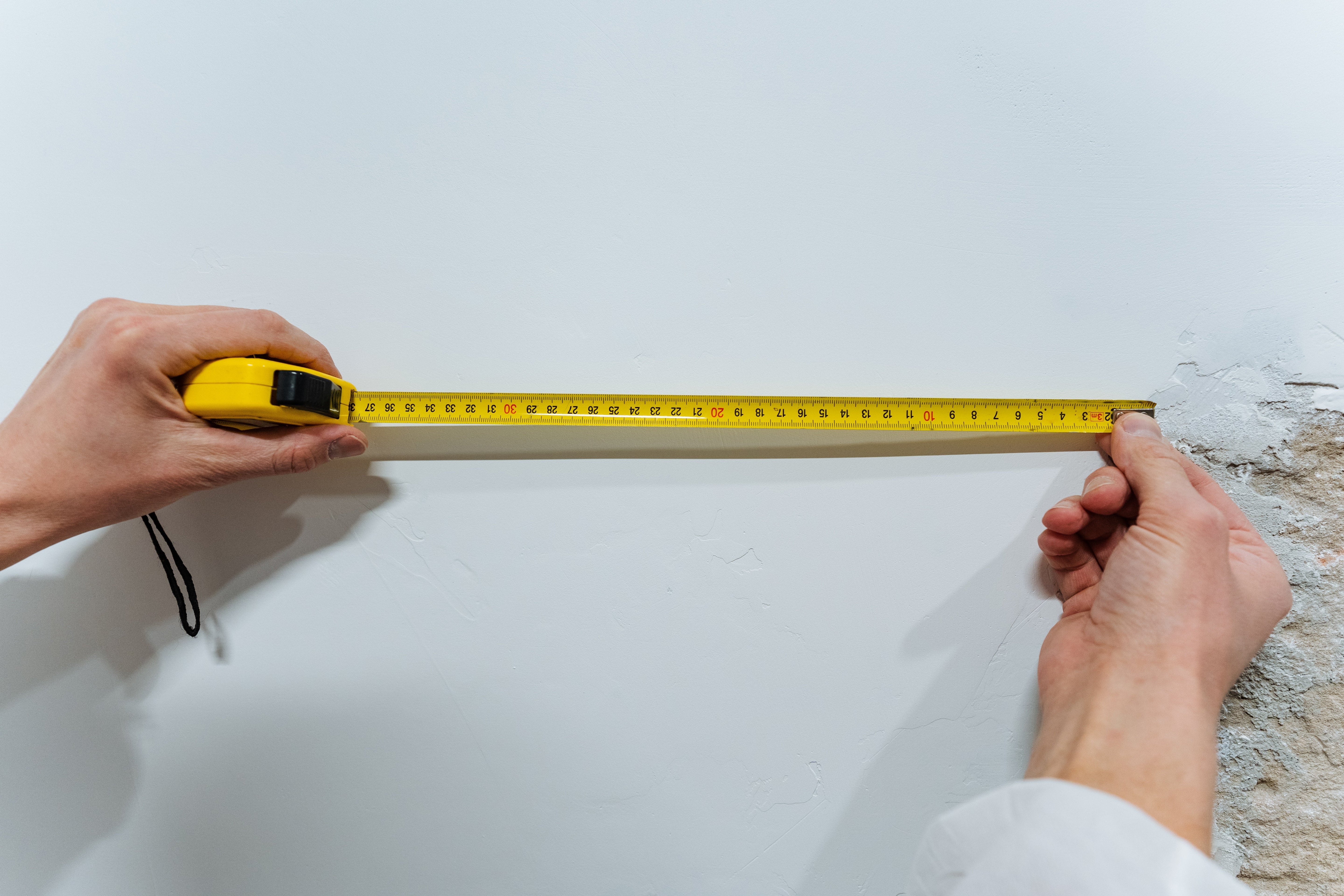
If you are using the house for a Shade Sail mounting point, you will normally need to locate the structural framing before installing the fixing hardware.
For a mounting point on an exterior wall, that usually means finding a wall stud.
The easiest way to do this is often from inside the house, where there are fewer layers between you and the framing. Once the stud has been located, its position can be measured and transferred to the outside wall.
There are several simple techniques you can use, and the best results normally come from using two or more of them together.
1. Knock on the Wall
Start with the simplest method.
Knock gently on the inside wall with your knuckles while moving horizontally across it.
Between studs, the wall generally sounds more hollow. As you move over a stud, the sound becomes firmer and usually slightly higher in pitch.
This will not normally give you the exact center of the stud, but it can narrow the search area considerably.
Once you hear a likely stud position, mark it lightly with a pencil or painter's tape and confirm it using another method.
Knocking works particularly well on standard drywall walls. Insulation, thicker wall linings and some older wall constructions can make the difference in sound harder to hear.
2. Use an Electronic Stud Finder
An electronic stud finder is usually the quickest way to confirm the stud location from inside the house.
Start a short distance away from the suspected stud and move the detector slowly across the wall.
Depending on the type of stud finder, it may identify the edge of the stud or show you its center.
If it detects the edges, approach the stud from both directions and mark each edge. The center point between those marks is the center of the stud.
It is worth making several passes to make sure you are getting the same reading each time.
Stud finder manufacturer Zircon recommends locating exterior wall framing from inside where possible because exterior cladding, insulation, metal and other wall materials can make scanning from outside unreliable.

3. Use a Strong Magnet
A strong magnet is another useful way to locate a stud from inside.
The magnet does not detect the timber itself. It finds the steel screws or nails that hold the drywall to the framing.
Move the magnet slowly across the wall until it is attracted to a fixing.
Then check directly above and below that position.
If you find several fixings running vertically along the same line, you have a good indication of the stud position.
A magnet is particularly useful for confirming a location you have already identified by knocking or with a stud finder.
4. Use Outlets, Windows and Stud Spacing as Clues
Features around the room can also help you work out where the framing is.
Electrical outlets and switches are commonly mounted beside a wall stud, so they can provide a useful starting point.
Windows and doors also have framing around them and can give you a fixed reference point for measuring.
Once you have positively located one stud, you can also check for others at common framing intervals.
Many residential walls are framed at 16 inches or 24 inches on center.
Do not rely on these measurements alone, though. Framing can change around windows, doors, corners and structural openings.
Transfer the Stud Position to the Outside Wall
Once you are confident you have located the stud, measure its position from something that can also be identified outside.
A window opening, door opening or building corner usually works well.
For example, if the center of the stud is 24 inches from the side of a window opening inside, take the same measurement from that opening outside.
Be careful when measuring from trim. Interior and exterior trim can be different widths, so use the actual opening or another common reference point wherever possible.
This should put you very close to the stud location on the exterior wall.
Check the Exterior for Confirmation
Once you have transferred the measurement outside, look for anything that supports your measurement.
On weatherboards or timber siding, you may be able to see nail heads, filled holes or small depressions where the cladding has been fixed.
Several fixings running vertically in the same area as your transferred measurement are a useful confirmation.
A strong magnet can also help locate concealed cladding fixings on non-metallic siding.
However, do not rely on the exterior fixing pattern alone. Some cladding is installed onto sheathing, battens or other supporting material rather than directly into the wall studs.
The inside measurement should remain your primary reference.
What About Metal Cladding?
Metal or corrugated cladding is harder to work with from the outside.
A magnet is no help because the entire wall surface is metal, and electronic stud finders generally struggle to scan through it.
The visible cladding screws can provide clues, but they may be fixing into battens or rails rather than the main wall framing.
For a metal-clad wall, locating the stud from inside and transferring the measurement outside is usually the better approach.
What About Soffits and Fascia?
If your Shade Sail mounting point is around the soffit or fascia, you may not be looking for a wall stud at all.
You may need to locate a roof rafter, truss or structural blocking.
Where possible, inspect the framing from inside the roof space and measure the position of the rafters or trusses from a known reference point.
Soffit vents may also give you enough access to see the framing.
Do not assume that timber immediately behind a soffit or fascia is suitable for the Shade Sail mounting point. Some of this framing may only be supporting the soffit or fascia itself.
Use More Than One Method
The most reliable approach is to combine several techniques.
For example:
You knock on the wall and hear a likely stud.
The stud finder confirms both edges.
A magnet finds a drywall screw in the same location.
You then measure from a nearby window and transfer that position outside.
When several methods point to the same location, you can be much more confident that you have found the framing.
Establish the Mounting Point Before Measuring Your Shade Sail
Once the stud or other structural framing has been located, you can establish the final Shade Sail mounting point and install the appropriate fixing hardware.
The framing still needs to be suitable for the loads generated by the Shade Sail. Sail size, shape, mounting point height, wind exposure, direction of pull and final tension all need to be considered.
For larger Shade Sails, exposed locations or unusual building construction, an engineer should confirm the final structural specification.
Your mounting points should be established before taking the final Shade Sail measurements.
Shade Space custom-makes Shade Sails to suit the actual mounting point measurements, so locate the framing, establish the fixing hardware, then measure between the finished mounting points.














Share:
Home Projects for Newly Retired Couples