



Why Carabiners Are Not Suitable for Shade Sails
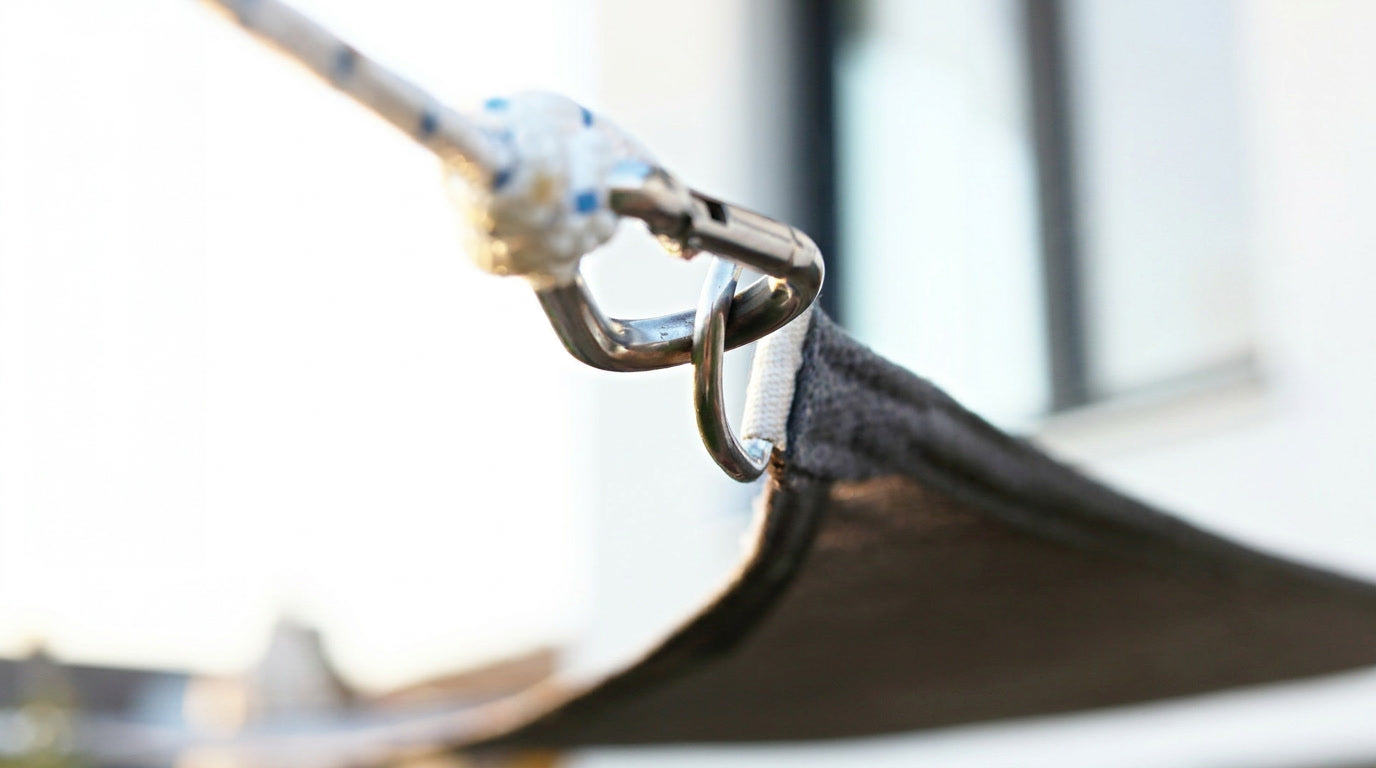
Carabiners, snap hooks, and other clip-style hardware may look like a simple way to install a Shade Sail, but they are not recommended for permanent ShadeSpace installations.
A Shade Sail needs to be installed under firm, even tension. It is constantly pulling against its fixing points, and wind can increase that pressure quickly. Because of this, the hardware needs to be strong, secure, adjustable, and suitable for long-term outdoor use.
Clip hardware usually falls short in a few key areas.
The Main Problems With Carabiners
Carabiners do not tension the sail. They only connect one point to another, which means there is little or no adjustment once the sail is fitted. Without proper tension, a Shade Sail can sag, flap, move around in the wind, and wear faster.
They can also create too much movement. Even a small amount of play at each corner can make the whole sail flutter. Over time, that movement can stress the fabric, stitching, Sail corners, fixings, and mounting points.
Most carabiners also have a moving gate, which can be a weak point in a permanent installation. The gate may twist, rub, catch, or sit at the wrong angle under load. Many clip-style fittings are not designed for constant outdoor tension, changing wind loads, or long-term structural use.
Impact on the Support Structure
Incorrect hardware does not only affect the Shade Sail itself. It can also affect the structure supporting it.
When a Shade Sail is loose or able to move too much, wind can cause repeated pulling and shock loading on the fixing points. This can transfer uneven force into posts, wall brackets, beams, or structural steel.
Over time, this movement may loosen fixings, twist brackets, place extra strain on posts, or create stress in the supporting structure. The bigger the sail and the more exposed the area, the more important it is to control movement with proper tension and suitable hardware. For further detail on just how much tension a Shade Sail exerts, read our How much tension blog.
A Shade Sail should work as a tensioned system. The sail, turnbuckles, shackles, and mounting points all need to work together.
What Should Be Used Instead?
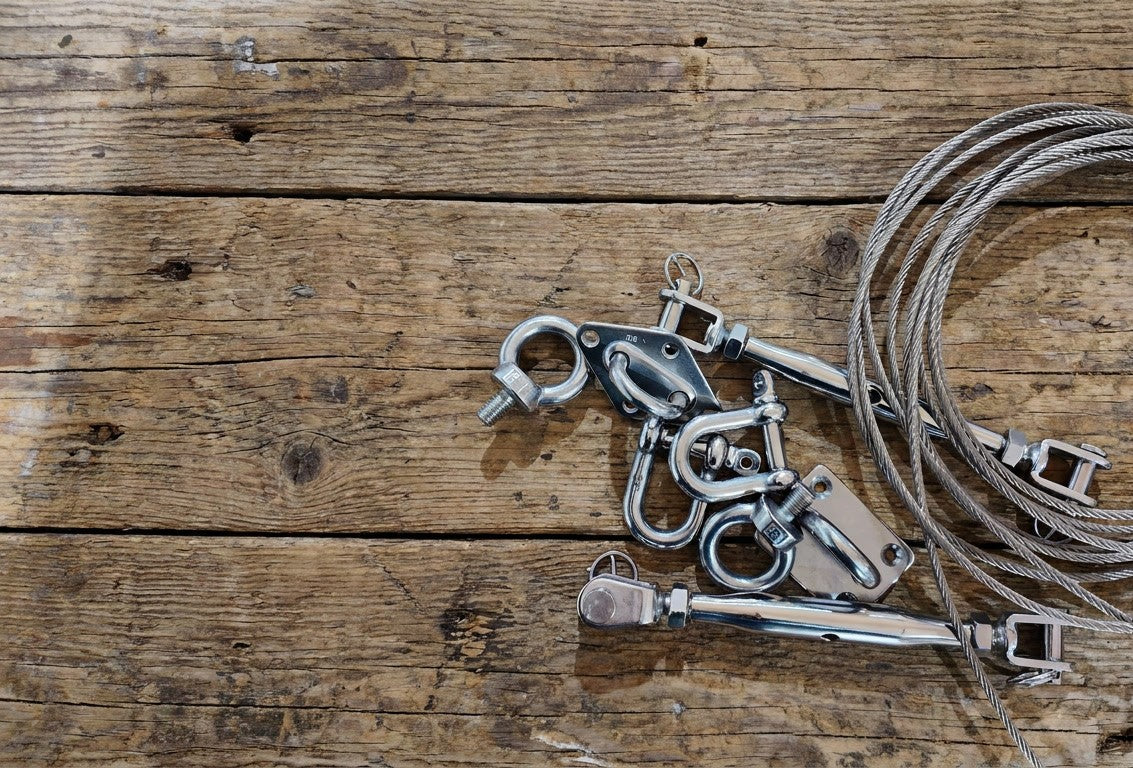
ShadeSpace Shade Sail installations, use proper Shade Sail fixing hardware such as 316 grade stainless-steel turnbuckles, and D-shackles.
D-shackles provide a secure corner connection. While a turnbuckle allows you flexibility for getting the proper tension on your Shade Sail
Strong fixing points transfer the load safely into suitable posts, wall brackets, beams, or structural steel.
The full installation should always consider wind loads, fixing strength, post height, sail size, sail shape, and final tension. For larger sails, exposed areas, or unusual layouts, an engineer or qualified installer should confirm the final specification.
Final Thoughts
Carabiners and clip hardware are not suitable for Shade Sails because they do not provide proper tension, therefore allowing too much movement which can create weak connection points, and place unnecessary stress on the supporting structure. A Shade Sail performs best when it is measured correctly, tensioned properly, and installed with hardware made for the job.
Browse Shade Space’s Shade Sail hardware range and hardware packs to choose the right fittings for your sail size, shape, and layout.






Share:
Why 316 Stainless Steel Is the Best Choice for Shade Sail Hardware