

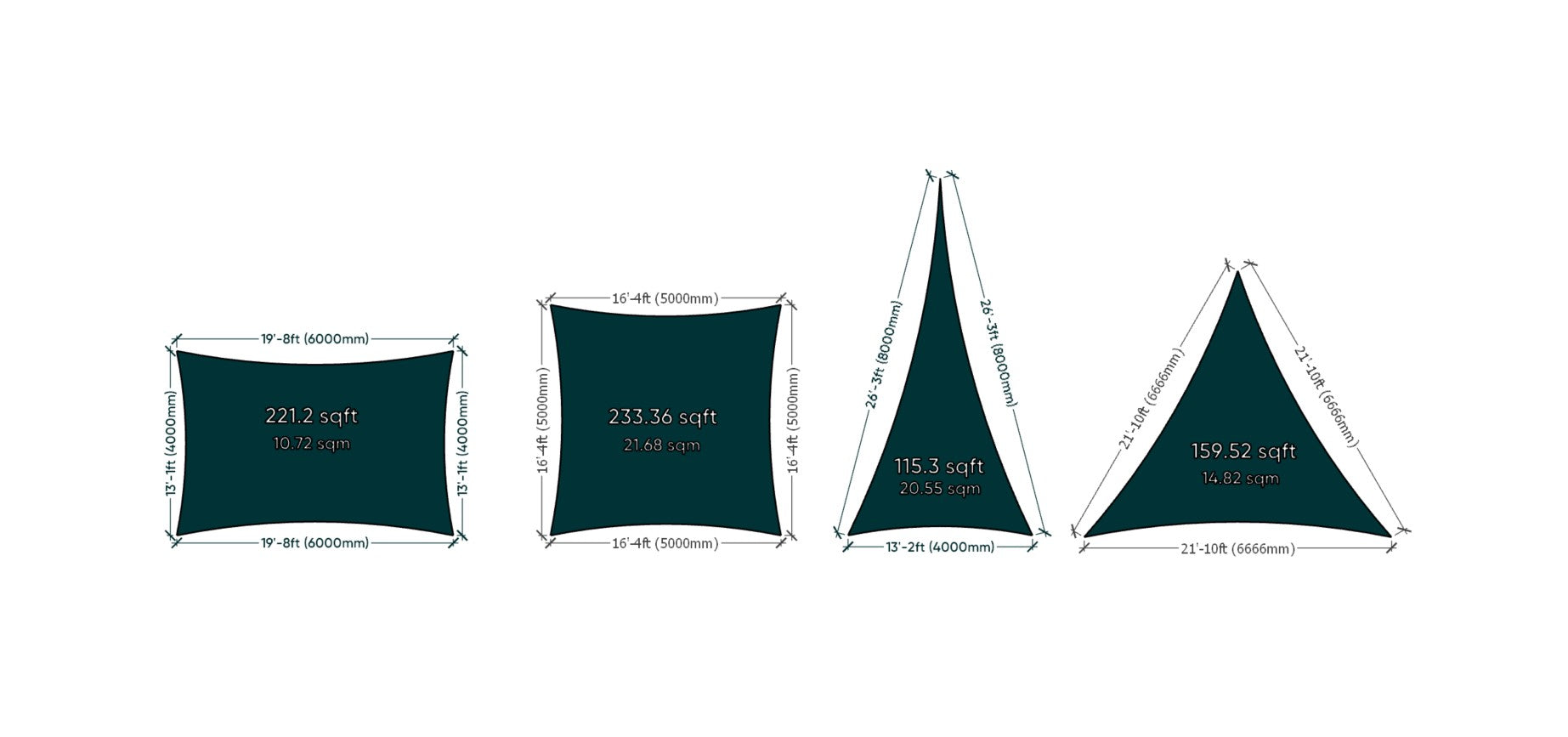
Shade sails can be made in almost any shape imaginable, but let’s focus on the most common options: triangles, squares, and rectangles.
Aesthetics
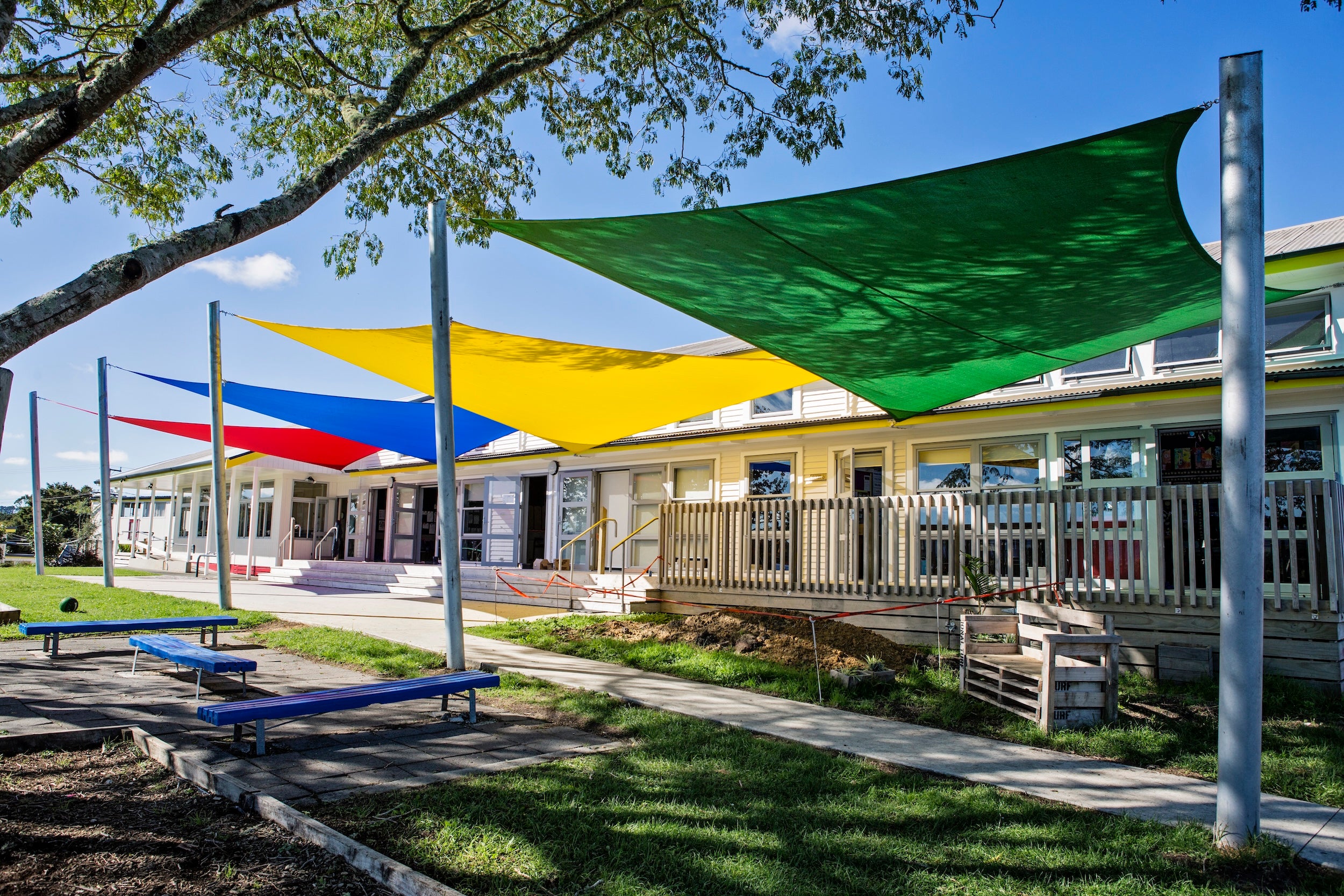
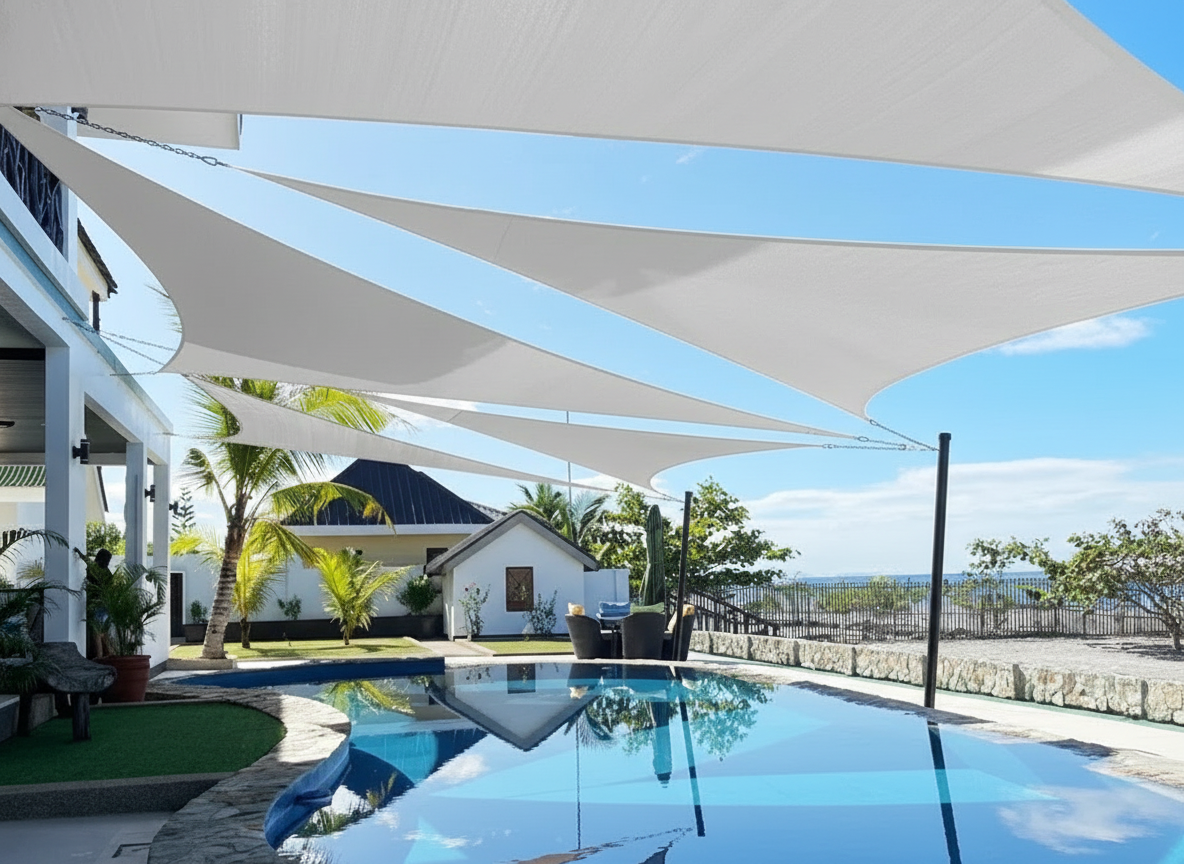
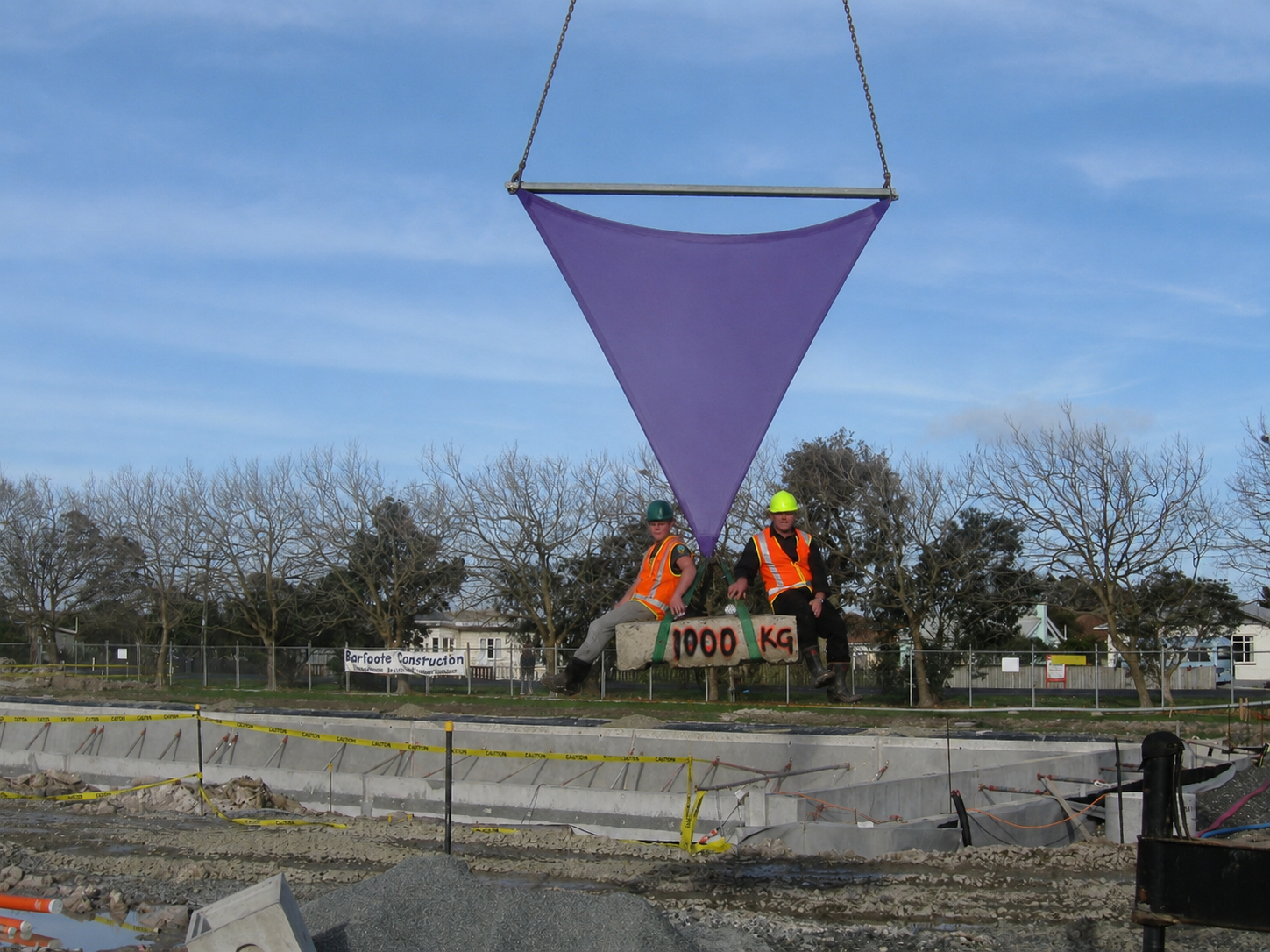
Triangle sails are visually striking and very pleasing to the eye. However, they generally provide less coverage than a square or rectangular sail of a similar perimeter size. Triangle sails are often most effective when used in pairs or grouped together.
While a triangle sail can be installed on a steep angle, because it only has three fixing points, it cannot achieve a true twisted or “Hypar” shape.
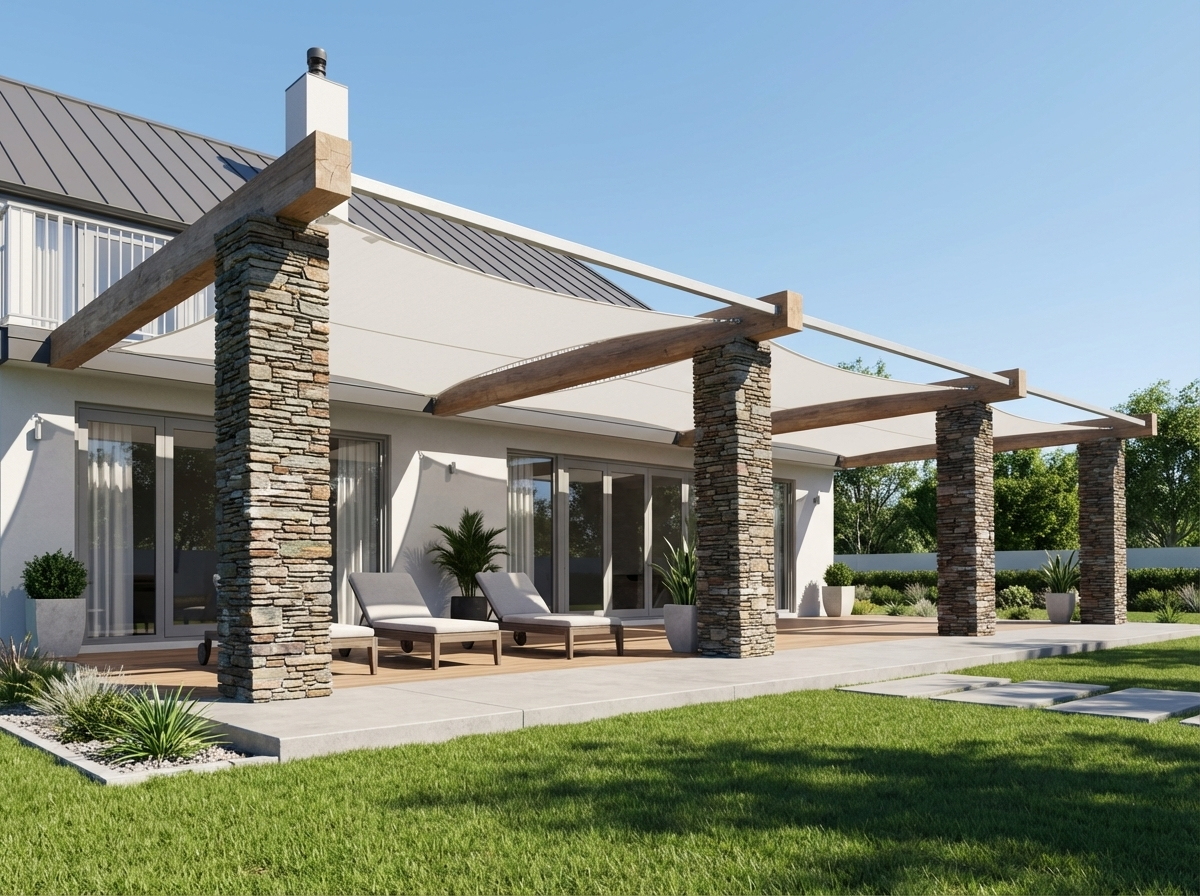
A square sail, on the other hand, lends itself perfectly to a Hypar shape (or twist), with two diagonally high points and two diagonally low points. This traditional twisted shape not only creates visual interest and eye-catching, but it also helps maintain fabric tension, reducing any chance of sagging in the centre of the sail. This tension also minimizes excess movement, helping to extend the lifespan of both the fabric and hardware.
A four-point rectangular sail can also achieve a twisted shape. However, if the sail is particularly long and narrow, it is often better to use six fixing points instead of four. This creates a double twist, which improves tension and stability.
Coverage Versus Cost
Shade sail pricing is generally calculated based on:
- (The total perimeter measurement) + (The number of corners/fixing points)
So, if you are comparing value in terms of dollars per square foot (or square meter) of shade coverage, there are a few important things to consider.
· The larger the perimeter, the higher the price.
· The more corners you add, generally increase the price.
· Every side of a shade sail requires a curve to be cut into each edge to ensure the sail will tension out and remain taut once installed. This curve is typically around 5% of the length of that side.
For example:
- A 10 ft side will usually have approximately 6 inches cut away.
- A 20 ft side will have approximately 12 inches cut away.

The greater the distance between two fixing points, the deeper the curve will need to be. This means different sail shapes with the same perimeter measurement, you’ll notice that some provide significantly more shade coverage than others.
This is important to keep in mind when planning your sail design. In general, we recommend avoiding very long, narrow triangle sails or long, skinny rectangles if your goal is to maximise shade coverage and achieve the best value for money.
That said, long narrow triangles — or a series of them — can look absolutely stunning and dramatic in the right setting. Ultimately, it comes down to the visual effect and feel you are trying to achieve 😊
Other Shape Options
Of course, triangles, squares, and rectangles are only the beginning. That’s the beauty of a custom-made shade sail — it can be designed into almost any shape you can imagine.





Share:
The Ultimate Alfresco Dining Setup: How Shade Elevates Your Outdoor Meals
Why we use PTFE thread on our Shade Sails?